Designing a trade show stand is much more than filling a space with brochures and roll-up banners. A successful stand is built on clear goals, a well-considered layout, functional technology and well-trained staff. In this guide, we will go through all the key stages of designing a trade show stand – from setting the goal to dismantling day.
Objective and location of the trade fair stand
Before planning a single square meter, you need to know what you want to achieve by participating in the trade fair. The most common goals are to collect new leads, increase brand visibility, present a product or service, and meet customers. The goal guides all subsequent decisions: stand size, location, technical solutions, and staffing.
The type of exhibition space has a significant impact on how much natural visitor flow is directed to the stand. A row space is the most traditional option, while a corner space offers visibility from two directions. An end space opens widely into the aisle, and an island space is the most visible, as it is accessible from all directions. Traffic flow, visibility and price vary depending on the type of space, so it is worth making a choice based on your goals.
Once the goal and location are clear, it's a good time to also consider the budget framework. Allocating resources between different areas – construction, technology, personnel and marketing – is easier when you know where to invest the most.
Designing a trade fair stand step by step
A good trade show stand communicates one clear message. If the stand tries to say everything, the message will be lost in the noise and competing stimuli. Choose one main message that is repeated in the graphics, technology and the speech of the staff.
When planning the layout, it is worth considering how visitors move around the stand. The flow of traffic will determine where the product display area, meeting space and storage space are placed. An open front invites visitors in, while the meeting space should be placed a little deeper so that discussions can take place in peace.
Accessibility is an important design principle. The stand should be wheelchair accessible, and presentation materials should be placed at different heights. This will make the stand inviting for all visitors.
Lighting, displays, and graphics form a visual whole. These elements are designed together, not separately, to ensure a cohesive look. It is a good idea to start the design process at least two to three months before the event to allow time to order and test all materials and equipment.
Exhibition stand technology
Technology is the most visible investment in a trade fair stand and often the element that will be remembered by visitors. Properly selected and implemented event technology can multiply the effectiveness of a stand.
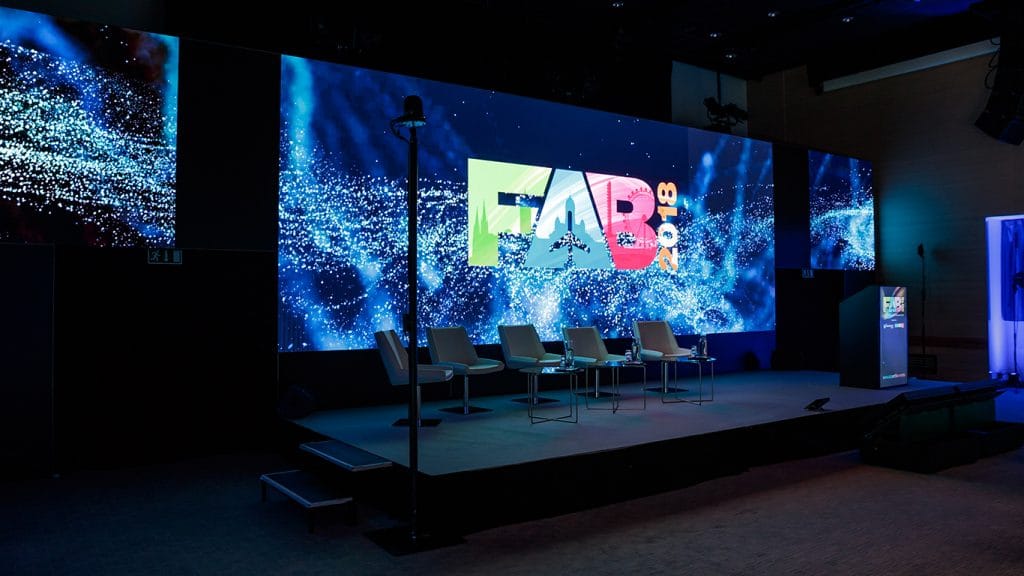
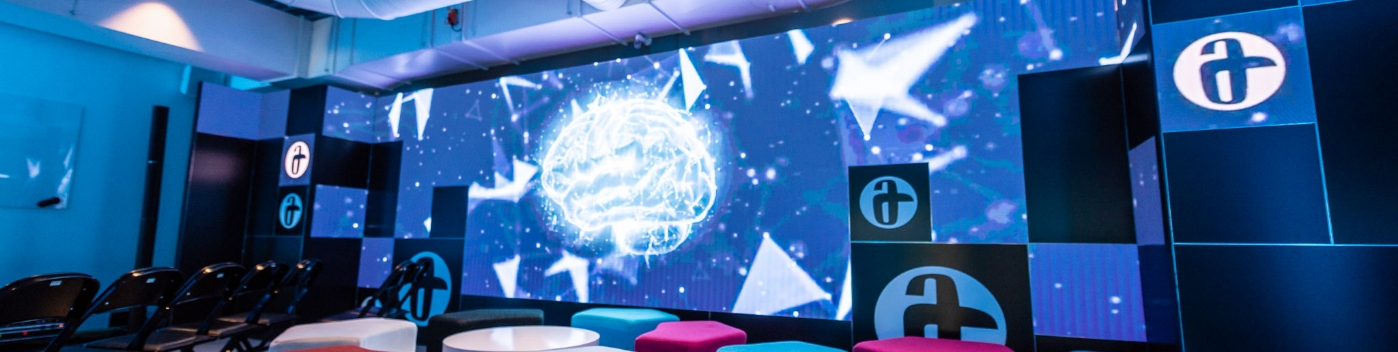
Screens and video walls are the most effective way to visually present products and services. LED walls and large display surfaces attract attention from afar, and their content can be easily updated during the event. Touch screens, on the other hand, enable interactive product presentations, where visitors can explore the offerings at their own pace. Projection is suitable for situations where a large image area is needed without a heavy structure.
Sound reproduction requires careful planning in the challenging acoustics of exhibition halls. Directional speakers and the right volume ensure that the message is heard within the stand without disturbing neighboring stands. Important: exhibition organizers often set volume limits, which should be clarified in advance and taken into account in the sound design.
Lighting solutions are one of the most important atmosphere creators. Spotlights direct the eye to the most important products, colored lights support the brand image, and special lights add depth to the stand. The basic lighting in the exhibition hall is rarely enough to create a spectacular stand, so your own lighting plan is almost always a worthwhile investment.
Interactive solutions such as virtual reality, augmented reality applications or interactive games extend the time spent at the stand and make the encounter memorable. A well-implemented interactive element can be the decisive factor that sets a stand apart from its competitors.
Electrical and network connections are the foundation of technology, but they are often left to the last minute. Order the necessary electrical outlets and network connections from the exhibition organizer well in advance – capacity may be limited, and late orders may mean additional costs or incomplete connections.
MagnumEvents is responsible for the technical implementation of the exhibition stands: sound, lighting, video technology, as well as stages and structures. You can order partial implementation or a comprehensive turnkey implementation according to your needs. Request a quote already during the planning phase, and we will tailor the technical package specifically for your stand.
Construction, implementation and dismantling of the trade fair stand
Construction and dismantling are the most logistically challenging phases of participating in a trade fair. The trade fair organizer determines the construction schedule and dismantling time, and these schedules must be strictly adhered to. Delays in the construction phase can mean rushing before the trade fair opens, and neglecting the dismantling schedule can lead to additional costs.
It is a good idea to schedule construction so that all technology is installed and tested before the day of the fair. During the testing phase, it is checked that the screens, sound and lighting are working as planned, and any necessary adjustments are made. A technical problem on the opening day of the fair is a situation that can be avoided with careful advance preparation.
Demolition is a mirror image of construction: all equipment and materials must be packed, marked, and transported away according to the organizer's instructions. Good demolition starts in the planning phase - when you know what to demolish and how, the work goes quickly and safely.
MagnumEvents event production also covers technical setup and teardown. Our experienced team knows the specific requirements of the trade fair environment and works according to the instructions of the trade fair organizer.
Logistics and schedule
Logistics is the invisible backbone of a trade fair stand. The transportation of equipment and materials to the exhibition hall, interim storage and installation must be carefully coordinated to ensure that everything is in the right place at the right time.
It's a good idea to start building a schedule backwards from the event date. When does construction start? When does technology need to be ordered? When do graphics and materials need to be ready? These questions will help create a concrete project schedule that is easy to follow.
One person in charge coordinates all suppliers and ensures that information flows correctly. When the contact person is clear, misunderstandings are reduced and problems are resolved quickly. This is especially true in situations where the department has several different suppliers – the developer, the technical supplier and the graphic designer may all need information at the same time.
MagnumEvents handles hundreds of event and exhibition stand assignments all over Finland every year. Our head office is located in Vantaa, but we serve clients all over the country. We are a member of the Finnish Association of Event Agencies and Agents and the Finnish Event Industry Association, and we have the status of a Reliable Partner according to the Client Liability Act.
Staff and lead generation
The best technology and the finest stand will lose their effectiveness if the staff is not prepared for their task. Training of trade fair staff is part of the stand design, not a separate issue.
Everyone working in the department should know what the main message is, how the products or services are presented, and how to collect leads. Consistency in the message is important: everyone tells the same story, even if in their own words. Inconsistent communication confuses the visitor and weakens the credibility of the brand.
Lead generation is often the most important measurable outcome of a trade show. Agree in advance how leads will be recorded – whether using an app, a form or business cards – and who will be responsible for handling them after the event. Quick follow-up after the event is critical: the faster you respond to a lead, the better your booth will be remembered.
It is worth agreeing on the measurement of success in advance. How many leads are you aiming for? How many meetings? Clear metrics make post-evaluation easier and help you develop your next trade fair participation.
If you are planning a larger event around the fair, also check out our public event services. MagnumEvents implements technically demanding events for a wide range of needs.
Designing a trade fair stand is a complex process, where every aspect affects the final result. Start planning early, set clear goals, and ensure that technology, staff, and logistics work seamlessly together. Request a quote from MagnumEvents – we will help you build a technical solution for your trade fair stand that supports your goals from start to finish.
Frequently Asked Questions
How should you start planning your exhibition stand?
Designing a trade show booth starts with defining a clear goal: do you want to collect leads, increase brand visibility, or introduce a new product? Once the goal is clear, you can build a layout, technology, and personnel plan around it. Practical tip: start planning at least two to three months before the event so that ordering and testing materials is not left to the last minute.
What technology is usually needed at a trade fair stand?
The most common technical solutions for a trade fair stand are screens and video walls, sound, lighting and interactive elements such as touch screens. The right event technology depends on your goal and the size of the stand – even for a small stand, good lighting and a single screen can make a big difference. Remember to find out the trade fair organizer’s sound restrictions before locking in a sound plan.
How does the construction and dismantling of a trade fair stand work in practice?
The construction and dismantling of the exhibition stand proceed according to a schedule confirmed by the exhibition organizer, which must be strictly adhered to. Allow sufficient time during the construction period for testing the technology so that any potential problems can be detected before the exhibition opens. A good practical tip: systematically mark and pack the dismantling materials in advance, so that the dismantling day goes quickly and safely.
Who can help with the implementation of the exhibition stand?
For the technical implementation of your exhibition stand, it is advisable to use an experienced partner who is familiar with the special requirements of the exhibition environment. MagnumEvents is a Finnish full-service event agency, whose event production covers sound, lighting, video technology, and equipment installation and dismantling – you can order partial implementation or a turnkey package. Request a quote already during the planning phase, and we will find the right package for you.
How are the electrical and network connections of the exhibition stand handled?
Power points and network connections are usually ordered directly from the trade fair organizer, so check the ordering channel and deadline immediately after confirming your participation. Capacity may be limited, and late ordering may mean additional costs or incomplete connections. Practical tip: calculate the required electrical power, taking all devices into account, and order a little extra capacity for unexpected needs.
How should you effectively utilize the leads collected at trade fairs?
Agree before the trade fair how leads will be recorded, who will be responsible for handling them and when to contact them – a quick response after the event is crucial. Also define clear metrics in advance, such as the target number of leads, so that the follow-up evaluation is concrete. Practical tip: prioritize leads into warm and cold contacts immediately after the event, so the sales team knows where to start.