Sound for a public event should be organized with careful advance planning, the right choice of equipment and, if necessary, professional sound engineering. A functional event sound system ensures that every participant can hear the speech and music clearly, regardless of where they are standing in the room or area. Below we will go over the most important questions that will help you make the right choices before the day of the event.
What sound equipment does a public event need?
The sound system for a public event consists of at least a mixer, amplifiers, speakers and microphones. In addition to these, monitor speakers for performers, cabling and possible effects equipment are often needed. The scope of the equipment depends on the size of the event, the program content and the operating environment.
For a small indoor event, such as a company meeting or seminar, a simpler setup is often sufficient: a wireless handheld microphone, a compact mixer and a few passive speakers. For larger events, such as trade fairs or outdoor festivals, a much more powerful and complex system is needed, including, for example, line arrays, subwoofers and a digital mixing console. The program content also has a significant impact: for speech alone, different equipment is required than for live music.
How does sound differ between indoor and outdoor events?
In indoor events, sound reflects off surfaces, which can cause echoes and indistinctness if acoustics are not taken into account. Sound reproduction in outdoor events, on the other hand, requires significantly more power because the sound propagates freely and is not supported by walls or ceilings. These environmental differences directly affect equipment selection and placement.
Indoor challenges
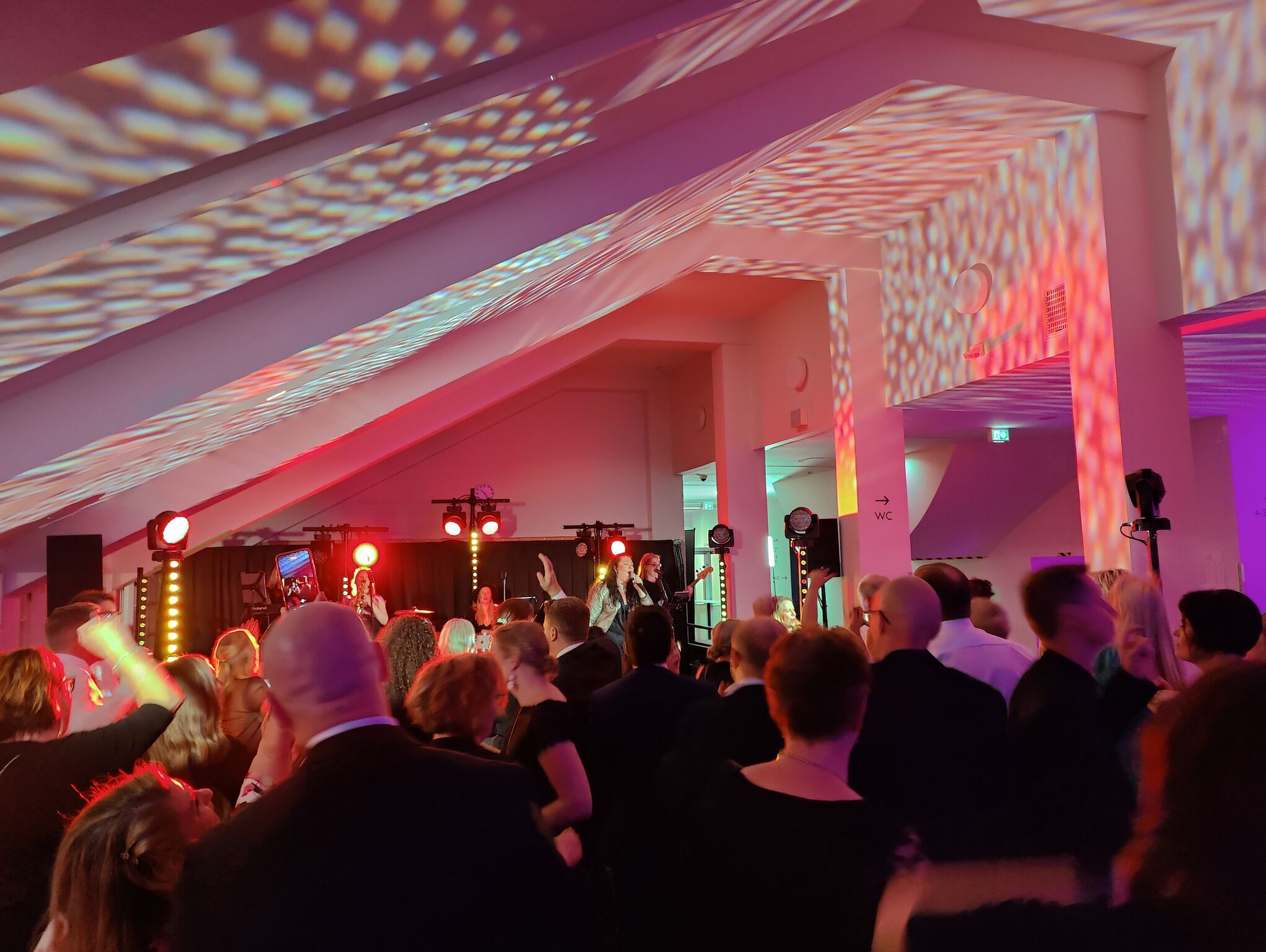
Indoors, concrete walls, high ceilings and hard floors can create unpleasant echoes. In this case, speaker placement is important: several smaller speakers spread throughout the room often produce a clearer result than one large speaker. Absorbing materials such as textiles and curtains also improve acoustics significantly.
Outdoor challenges
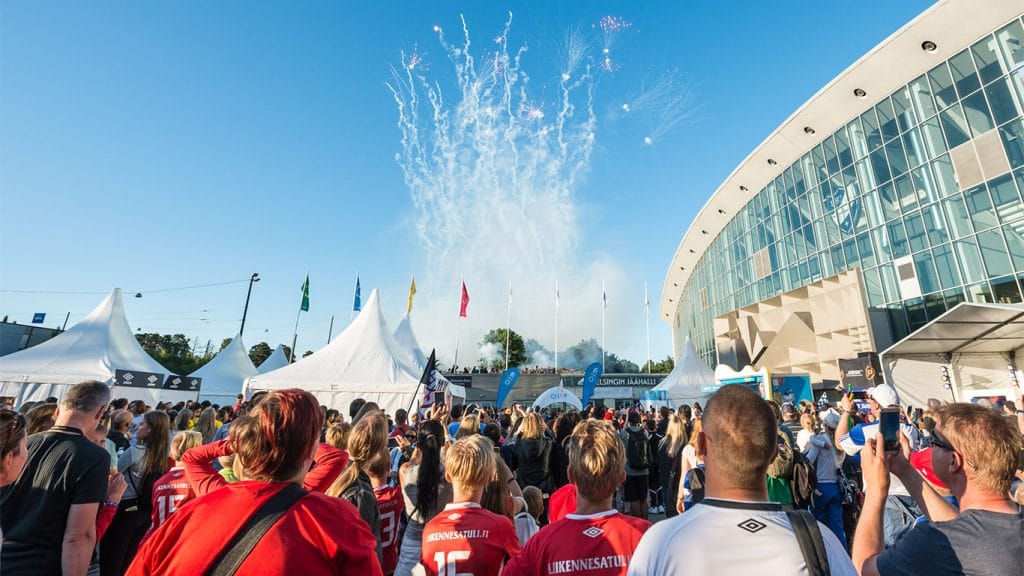
At outdoor events, wind, ambient noise and open space place higher demands on the sound system. The speakers must be precisely aimed at the audience area to prevent unnecessary sound from escaping to the sides or causing disturbance to the surrounding area. The equipment must also be weatherproof.
How much power is enough for events of different sizes?
The power requirement is primarily determined by the number of people in the audience, the size of the venue and the program content. As a rough rule of thumb, a system with a few hundred watts is sufficient for an indoor event of a few dozen people, while an outdoor event with several thousand people may require a sound system with tens of kilowatts.
In practice, the following factors should be considered when sizing power:
- Audience size and venue size: The more people and the larger the area, the more power is needed.
- Program content: Live music requires more power and dynamics than just speech or background music.
- Surroundings: Outdoor spaces require more power than indoor spaces due to sound propagation.
- Noise level: If there is a lot of background noise at the venue, the sound system must be powerful enough to cover it.
It is better to oversize the system than to constantly push the hardware to its limits, as an overloaded system will produce poor sound quality and may be damaged.
When is it worth outsourcing sound to a professional?
It is advisable to outsource sound to a professional whenever the event is public, the audience is more than a few dozen people, or the program content includes live music, multiple microphone sources, or complex sound technology. Outdoor events and demanding indoor spaces also favor the use of a professional.
A professional sound engineer not only brings the right equipment, but also knows how to react quickly to unexpected situations, such as technical failures or acoustic problems. There is no time to troubleshoot equipment problems on the day of the event, and poor sound quality leaves attendees with a negative memory of the entire event. At MagnumEvents, we professionally implement event sound technology for both small indoor events and large outdoor events.
How is the sound system planned before the event day?
Planning an event's sound system begins with mapping out the space and program well in advance of the event day. Essential planning steps include assessing the acoustics of the venue, selecting equipment, planning speaker placement, and conducting a sound check before the audience arrives.
A good design process proceeds as follows:
- Venue tour: Assess the acoustics of the space, power supply, and possible obstacles to speaker placement.
- Program review: Find out how many microphone sources are needed, whether there will be live music at the event, and whether monitoring for performers is needed.
- Equipment list and equipment reservation: Make sure all necessary equipment is reserved and tested before the event.
- Sound check: Conduct a sound check before the audience arrives so that any problems can be detected and corrected in a timely manner.
- Backup plan: Be prepared for technical issues by carrying a spare battery, extra cables, or a replacement microphone.
The more complex the event, the earlier you should start planning. Last-minute solutions in sound technology easily lead to compromises that are directly visible and audible in the quality of the event.
Do you want to ensure that your event's sound system works flawlessly from start to finish? Request a quote from us and tell us the date, location, and number of attendees. We provide professional sound technology for small meetings as well as large outdoor events.